
Table of Contents
- Step 1: Assess Your Floor Plan and Create a Layout
- Step 2: Choose a Budget-Friendly Color Palette
- Step 3: Invest in Multifunctional Furniture for Small Spaces
- Step 4: Use Zoning and Area Rugs to Define Zones
- Step 5: Layer Lighting for Atmosphere and Function
- Step 6: Add Affordable Wall Decor for Renters
- Step 7: Organize Your Entryway and Kitchen
- Common Budget Decorating Mistakes to Avoid
- Frequently Asked Questions
Last Updated: October 4, 2026
Step 1: Assess Your Floor Plan and Create a Layout
When you decorate studio apartment budget-conscious, the first step is understanding your floor plan shape. Layout matters far more than square footage, a square studio feels completely different from an L-shaped or galley layout.
Measure and document these essentials:
- Total square footage and room dimensions (length × width)
- Window locations and natural light direction
- Door swing paths (ensure furniture doesn't block entry)
- Ceiling height, architectural features, and any built-in elements
- Electrical outlet locations (critical for lighting and tech placement)
Sketch your floor plan to scale and use a furniture scale calculator to test arrangements before purchasing, preventing costly returns.
Layout Strategies by Studio Shape
Square Studios Position your bed along one wall opposite the entry. Place your sofa perpendicular to the bed, creating an L-shaped living area.
L-Shaped Studios Use the natural alcove for your bed, desk, or dining nook, it feels semi-private without a door. Position your bed in the alcove with the living area in the main section.
Galley Studios Avoid lining both long walls with furniture. Instead, position your bed on one short wall and a console table or desk on the opposite short wall.
Studios with Alcoves or Nooks Treat alcoves as bonus zones. An alcove bed creates a defined sleeping area without eating into main living space. A kitchen nook becomes a dining area with a small bistro table and two chairs.
Create Distinct Zones Without Walls
Even in an open-concept layout, you can create psychological separation using furniture placement and visual cues. This prevents the space from feeling chaotic and helps your brain compartmentalize activities.
- Sleeping zone: Bed positioned on one wall, ideally with a headboard or floating shelves above for visual anchoring
- Living zone: Sofa and coffee table grouped together, separated from the bed by a rug or low furniture
- Work/dining zone: Desk or small table in a corner or along a wall, ideally near a window for natural light
- Entryway zone: A narrow console, shelf, or hooks immediately inside the door for keys and bags
Use area rugs, lighting, and color to reinforce these zones without permanent changes. A rug under your sofa anchors the living area; a different rug under your bed defines the sleeping zone. Pendant lights over a desk or dining table create a sense of enclosure. This layered approach costs less than furniture and works for renters.
| Planning Step | Time Required | Impact |
|---|---|---|
| Measure and sketch floor plan | 20 minutes | Prevents oversized furniture purchases |
| Identify your studio shape and natural zones | 15 minutes | Guides furniture placement strategy |
| Test layout with scale tool | 30 minutes | Saves hundreds on returns |
| Document lighting and outlet locations | 15 minutes | Informs lighting and tech placement |
| Take reference photos | 10 minutes | Helps you visualize changes before buying |
Step 2: Choose a Budget-Friendly Color Palette
Your color choices directly affect how spacious your studio feels and how much you'll spend. Light colors expand rooms; warm tones create coziness.
Start with a neutral base: whites, creams, soft grays, or warm beiges. These reflect light, make your studio feel larger, and are easiest to find secondhand.
Limit yourself to three main colors: one neutral base (60%), one warm accent (30%), and one bold pop color (10%). This keeps costs down and ensures pieces coordinate naturally.
Sourcing Your Color Palette on a Budget
Where to find budget-friendly furniture and décor by color:
- Facebook Marketplace and Craigslist: Search by color and filter by price. Local pickup eliminates shipping. Save 60-80% versus retail.
- Habitat for Humanity ReStore: Neutral pieces available at 40-70% off retail. Many locations offer free delivery.
- Estate sales: Advertised on EstateSales.net. Neutral-colored pieces sell slower, offering better deals.
- Thrift stores: Best for small décor items, lamps, mirrors, and textiles at $5-$20. Inventory rotates weekly.
- Buy Nothing groups: Free Facebook community groups where people give away items in your chosen colors.
Pro tip: Commit to your three-color palette before shopping secondhand to prevent impulse purchases and keep your space cohesive.
Color Psychology for Small Spaces
- Light neutrals: Reflect light and make rooms feel larger. Best for walls and large furniture.
- Warm neutrals: Create coziness without darkening the space. Ideal for bedding, rugs, and accent walls.
- One bold accent color: Adds personality through one wall, artwork, or textiles. Creates a focal point that reduces visual chaos.
- Avoid: Multiple competing colors, dark walls, and trendy colors that date quickly.
Testing Your Palette Before Committing
Before buying furniture or paint, test your color scheme in your actual space.
- For paint: Buy sample pots ($5-$10 each) and paint large swatches on your walls. View them at different times of day, morning light, afternoon light, and evening light reveal how colors actually look in your space.
- For furniture and textiles: Use Pinterest or Instagram to create a mood board with your three colors. Search hashtags like #studioapartmentdecor or #smallspaceliving filtered by your color scheme. This helps you visualize how pieces work together before purchasing.
- For secondhand finds: Take photos of potential pieces in your space using your phone's camera. The photo will show you how the color reads in your lighting before you commit to buying.
This testing phase costs nothing and prevents expensive mistakes. A color that looks perfect in a store photo may clash with your natural light or existing pieces.
Step 3: Invest in Multifunctional Furniture for Small Spaces
Multifunctional furniture is essential when you decorate studio apartment budget-friendly. A bed with built-in drawers stores items underneath. A desk that doubles as a dining table saves square footage. An ottoman with hidden storage holds blankets and keeps your living area tidy.
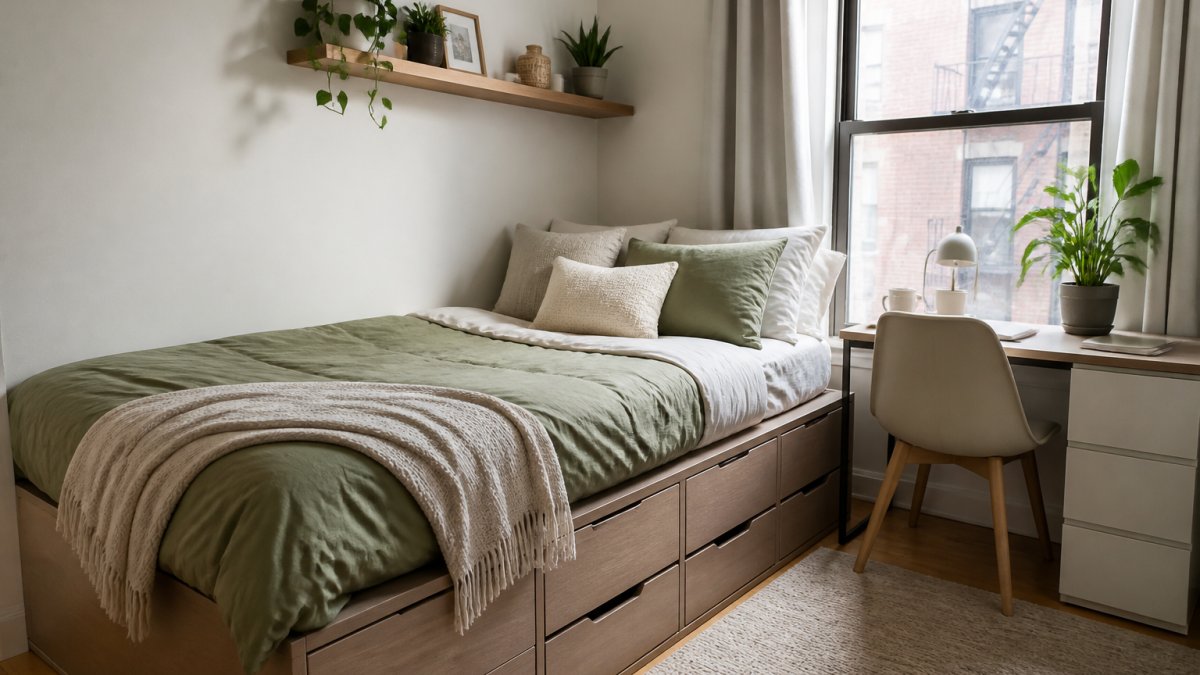
Look for pieces with vertical storage. Wall-mounted shelves, floating desks, and tall bookcases draw the eye upward and maximize square footage. The Shoe Organizer - Durable Adjustable Space Saving Rackt from Loop Te Loop ($201.96) provides compact storage while keeping your entryway and bedroom organized.

Storage Solutions That Double as Decor
Storage doesn't have to be boring. Choose pieces that look intentional and stylish while hiding clutter.
Woven baskets under a console table store items while adding texture. Open shelving with organized baskets keeps essentials visible and accessible. A fabric storage bench at the foot of your bed provides seating and hidden storage in one.
The Sock Underwear Organizer Drawer Divider Foldable Closet Organizers Bins from Loop Te Loop ($102.25) keeps drawers tidy and makes getting dressed faster. When your bedroom storage is organized, your whole space feels larger and calmer.
Step 4: Use Zoning and Area Rugs to Define Zones
Zoning with textiles is a 2026 trend that works beautifully in small spaces. Area rugs define distinct zones without requiring walls or permanent changes.
Place a rug under your bed to anchor the sleeping area. Use another rug in the living zone to separate it from your kitchen.
About Wall Art's 2026 studio apartment design guide recommends using subtly patterned rugs in light colors like off-white and cream to visually separate living zones.
Choose rugs that complement your color palette. A light, neutral rug works in most studios. If you want pattern, keep it subtle. Bold geometric prints can overwhelm a small space.
Shoe Organizer – Durable Adjustable Space Saving Rackt →
Layer rugs strategically. A larger rug in your living area anchors furniture, while a smaller rug under your bed adds warmth and definition.
Step 5: Layer Lighting for Atmosphere and Function
Lighting transforms how your studio feels. Layered lighting means combining overhead, task, and accent light sources. This approach is cheaper than relying on one bright overhead fixture.
Start with what you have. If your studio has overhead lighting, use it as your base layer. Add table lamps on nightstands and desks for task lighting.
String lights or wall sconces add warmth without taking up floor space. These options cost $15-$40 and create a cozy atmosphere instantly. Position them at eye level to avoid harsh shadows.
Consider a portable projector for movie nights and ambiance. The 720P Auto-Focus Portable Projector from Loop Te Loop ($296.76) provides entertainment and mood lighting for your studio.

Dimmers are budget-friendly upgrades that let you control mood. If you can't install permanent dimmers, use smart bulbs that adjust brightness from your phone.
Step 6: Add Affordable Wall Decor for Renters
Rental-friendly wall decor means no holes, no damage, and no lost security deposits. You can still create a beautiful, personalized space without permanent changes.
The one-large-print rule replaces cluttered gallery walls in 2026. Choose one meaningful piece of artwork per zone instead of covering walls with small prints.
Use removable wall adhesive strips to hang lightweight artwork. Peel-and-stick wallpaper adds pattern to a single wall or accent area. Command hooks hold shelves and mirrors without damaging paint.
Tapestries hung from tension rods add color and texture. Floating shelves with removable adhesive hold books, plants, and small décor items. Mirrors reflect light and make your space feel larger.
The Upper Hand - Gold & Silver Sheen Obsidian Points from Loop Te Loop ($12.65) adds a meaningful accent to a shelf or nightstand.

Step 7: Organize Your Entryway and Kitchen
Your entryway is the first thing you see when you enter. A small cabinet or shelf near the door creates a landing zone for keys, mail, and bags. This single change makes your whole studio feel more organized.
Use vertical space above your entryway. A narrow shelf or wall-mounted organizer keeps items accessible without eating into floor space. Label everything so you know where things belong.
In your kitchen, maximize cabinet and counter space. Use stackable containers to organize pantry items. A small island or cart provides extra counter space and storage.
Keep your kitchen minimal. Store only items you use regularly on counters. Everything else goes in cabinets or under-sink storage. A clean kitchen makes your whole studio feel bigger and more peaceful.
Common Budget Decorating Mistakes to Avoid
Avoid buying furniture before measuring your space. Oversized pieces are expensive mistakes that won't fit. Always measure twice, buy once.
Don't ignore lighting. A dark studio feels small and depressing, no matter how nice your furniture is.
Don't fill every corner with stuff. Empty space is valuable in a small apartment. Resist the urge to add more items just because you have wall space available.
Avoid clashing color schemes. Too many colors create chaos. Stick to your three-color palette and you'll feel calmer and more in control of your space.
Don't forget about vertical storage. The floor is your most valuable real estate. Use walls for shelves, hooks, and hanging organizers instead.
Decorating a studio apartment on a budget comes down to intentional choices and smart storage.
Frequently Asked Questions
What is the best way to decorate a studio apartment on a budget without making it look cluttered?
Focus on the 'one large print per zone' rule rather than gallery walls, and use subtly patterned area rugs in light creams or off-white to visually separate living areas. Stick to a neutral color palette with 2-3 accent colors maximum. Prioritize quality basics like bedding, curtains, and layered lighting (table and floor lamps) over numerous small decor pieces. This creates a cozy, intentional look while keeping costs low.
How can multifunctional furniture for small spaces help me save money when decorating?
Multifunctional pieces eliminate the need to buy separate items for different purposes. A storage ottoman serves as seating, a footrest, and hidden storage. A wall-mounted desk folds up when not in use. These pieces cost less than buying individual furniture items and maximize your square footage, making your studio apartment feel larger and more organized without breaking your budget.
What affordable wall decor for renters can I use without damaging my apartment?
Use removable adhesive strips, command hooks, and peel-and-stick wallpaper instead of nails or permanent installation. Lean artwork against walls rather than hanging it. Fabric wall tapestries secured with removable hooks add color and texture. These options cost between $10-$50 per item and leave no damage when removed, making them ideal for renters who want to personalize their space without losing their security deposit.
How do I know if my small apartment layout ideas will actually work before buying furniture?
Use furniture scale calculators and AI layout tools to visualize your space before purchasing. Measure your square footage and doorway widths. Sketch your floor plan on paper or use free design apps to test furniture placement. This prevents costly mistakes and helps you identify the best zones for sleeping, living, and working in your studio apartment.


