
Table of Contents
- What to Look for in Eco-Friendly Skincare for Sensitive Skin
- How to Verify Quality of Skincare Online
- Non-Toxic Skincare for Sensitive Skin: Key Certifications
- Top Eco-Friendly Skincare Products for Sensitive Skin
- Zero-Waste Skincare Routine for Beginners
- How to Patch Test New Skincare Formulas Safely
- Frequently Asked Questions
Last Updated: September 25, 2026
What to Look for in Eco-Friendly Skincare for Sensitive Skin
Choosing eco-friendly skincare sensitive skin requires understanding what actually matters. According to Market.us consumer preference data, 59% of respondents prefer skincare products made from natural or organic ingredients. But preference doesn't guarantee safety for reactive skin. The real question is: which eco-conscious products won't trigger irritation?
Ingredient Transparency and Non-Toxic Formulas
Ingredient transparency separates trustworthy brands from greenwashing. Non-toxic formulas exclude synthetic chemicals, preservatives, and artificial fragrances that commonly trigger reactions in compromised skin barriers.
Sustainable Packaging and Zero-Waste Practices
Environmental responsibility extends beyond formulation to packaging. Glass containers, aluminum tubes, and refillable systems reduce plastic waste. Post-consumer recycled (PCR) materials are better than virgin plastic, but compostable packaging remains the gold standard for zero-waste routines.
How to Verify Quality of Skincare Online
Verifying skincare quality without testing in person is challenging. Start by checking certifications and third-party testing. Dermatologist-tested claims should be backed by clinical studies, not just marketing language.
Non-Toxic Skincare for Sensitive Skin: Key Certifications
Certifications matter when navigating the unregulated "clean beauty" space. The beauty industry lacks official regulatory definitions for terms like "clean," "natural," or "non-toxic," making certifications essential for verification. However, not all certifications are equally relevant for sensitive skin, some focus on environmental impact, while others directly address skin barrier health.
Certifications That Protect Sensitive Skin:
-
Certified Organic (USDA Organic or equivalent): Ensures ingredients are grown without synthetic pesticides or genetically modified organisms. For sensitive skin, this matters because pesticide residues can accumulate in botanical extracts and trigger inflammatory responses. Organic certification doesn't guarantee gentleness, but it reduces the likelihood of chemical irritants in raw materials.
-
Hypoallergenic: Products tested for allergen potential through controlled patch testing protocols. This is one of the most directly relevant certifications for reactive skin, though the testing standards vary by certifier. Look for hypoallergenic claims backed by third-party dermatological testing rather than self-certification.
-
Dermatologist-Tested: Third-party dermatological testing adds credibility, but verify what "tested" means. Reputable brands publish actual clinical study results showing how products performed on sensitive or compromised skin barriers. Generic dermatologist-tested claims without published data are marketing language.
-
Cruelty-Free (Leaping Bunny or PETA certification): Confirms no animal testing. While this is an ethical standard rather than a safety standard, it often correlates with brands that invest in alternative testing methods like human patch testing, which can provide better data for sensitive skin compatibility.
Emerging Certifications for Sensitive Skin:
-
Microbiome-Friendly or Microbiome-Safe: This certification category is rapidly expanding as dermatologists recognize that sensitive skin thrives when the skin's natural bacterial ecosystem is preserved. Products labeled as microbiome-safe avoid broad-spectrum preservatives that strip beneficial bacteria. Instead, they use gentler preservation systems or fermented ingredients that support skin flora. When evaluating microbiome claims, check whether the brand discloses its preservative system and whether it has published research on skin microbiota impact.
-
Non-GMO Project Verified: Confirms ingredients aren't genetically modified. For sensitive skin, this matters primarily for botanical extracts, as some genetically modified crops are bred for pesticide resistance and may carry higher residual pesticide loads. This certification is less critical than organic certification but adds an extra layer of ingredient purity.
Certifications to Approach Cautiously:
-
"Clean Beauty" or "Natural" labels without third-party backing: These terms have no regulatory definition. A product can claim "clean" or "natural" without any certification or testing. For sensitive skin, these unverified claims are red flags, always cross-reference with actual certifications or published ingredient transparency.
-
"Dermatologist-Recommended" without clinical data: This differs from dermatologist-tested. A dermatologist may recommend a product based on anecdotal experience, but without published clinical trials on sensitive skin populations, the claim lacks scientific weight.
Top Eco-Friendly Skincare Products for Sensitive Skin
Authentic African Black Soap: Natural Cleansing Foundation
This handcrafted soap from Ghana uses traditional recipes free from artificial ingredients, chemicals, and fragrances. Rich in minerals, antioxidants, and vitamins, it provides a moisturizing cleanse suitable for sensitive, oily, dry, and problem-prone skin.
Price: $10.13 | Add to cart

Marée Azelaic Acid Solutions: Redness Relief Without Compromise
Azelaic acid is clinically proven for sensitive skin, calming redness while addressing blemishes. Marée offers two formats: a serum and a cream, both designed for reactive skin that struggles with conventional acne treatments.
Fragrance-Free Routine Kits: Complete Systems for Reactive Skin
Complete kits eliminate guesswork by pairing complementary products designed for sensitive skin. The Sensitive Skin Fragrance Free Essentials Kit ($156.73) includes a soap bar, toner, serums, and cream in one coordinated system.
Bravo Sierra Face & Body Cleansing Bar: pH-Balanced Simplicity
Designed specifically for sensitive skin, this cleansing bar is fragrance-free and pH-balanced to maintain your skin's defense barrier. It gently removes impurities, sweat, dirt, and pollution without stripping natural oils.
Price: $13.26 | Add to cart

Zero-Waste Skincare Routine for Beginners
Building a zero-waste routine starts with solid fundamentals: a cleanser, treatment, and moisturizer. Skip multi-step routines initially. Reactive skin benefits from simplicity.
| Step | Product Type | Duration | Frequency |
|---|---|---|---|
| Cleanse | Bar soap or liquid | 1-2 minutes | Twice daily |
| Treat | Serum or cream | 1 minute | Once or twice daily |
| Moisturize | Cream or butter | 1 minute | Twice daily |
| Patch test new products | Any new addition | 48 hours minimum | Before full use |
How to Patch Test New Skincare Formulas Safely
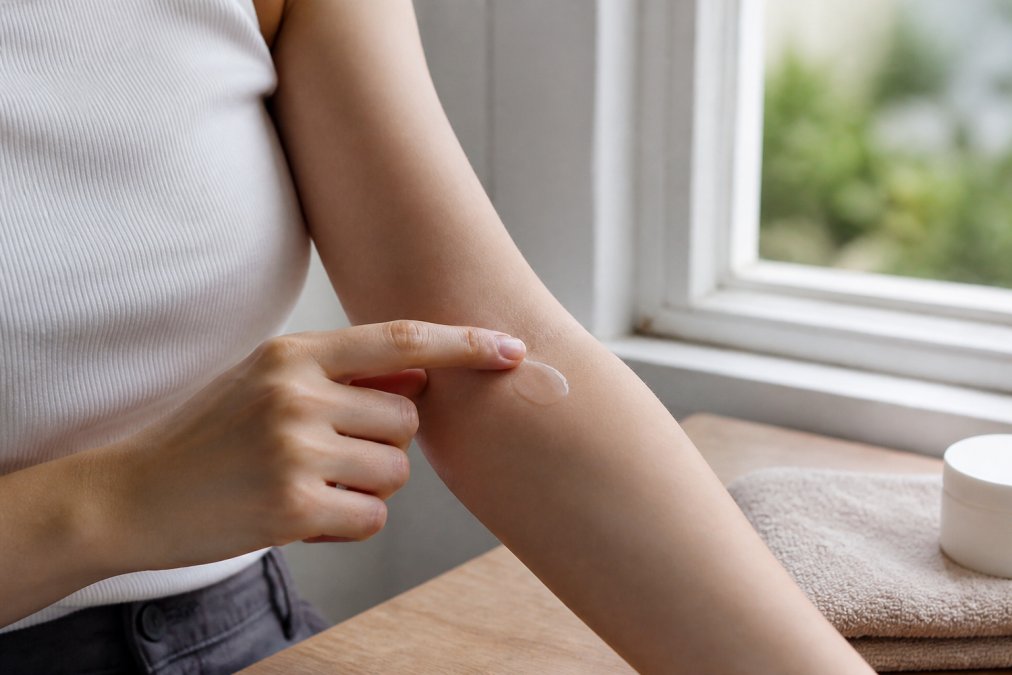
The Patch Test Process:
-
Choose a test area, Inner forearm or behind the ear works best. These areas are sensitive but less visible if irritation occurs.
-
Apply a small amount, Use a dime-sized amount of the product. Don't dilute it; test the formula as you'll use it.
-
Wait 48 hours, Avoid water, sweat, and friction on the test area. Don't shower or exercise heavily during this window.
-
Observe for reactions, Watch for redness, itching, burning, swelling, or any unusual sensation. Even mild discomfort signals incompatibility.
-
Proceed or discontinue, If no reaction occurs, introduce the product to your full routine gradually. If irritation appears, discontinue immediately.
Frequently Asked Questions
What makes a skincare brand truly eco-friendly and not just greenwashing?
Genuine eco-friendly skincare brands demonstrate transparency in ingredient sourcing, use sustainable packaging (like glass jars or compostable materials instead of plastic), and often carry third-party certifications. Check for certifications like USDA Organic or Leaping Bunny. Brands like Epionce and Pai Skincare are recognized leaders because they publish detailed ingredient lists and prioritize both environmental impact and dermatological safety. Avoid brands that use vague terms like 'natural' without backing them up with specific certifications or transparent sourcing information.
How do I know if a skincare product is safe for sensitive skin when ordering online?
Look for products labeled fragrance-free, hypoallergenic, and clinically tested for sensitive skin. Check the ingredient list for common irritants like synthetic fragrances, essential oils, and harsh preservatives. Many eco-friendly brands now provide detailed ingredient transparency on their websites. Perform a 48-hour patch test on a small area of skin before full application. Products like the Sensitive Skin Fragrance Free Skincare Routine Essentials Kit ($156.73) are specifically formulated to avoid irritation, and the Bravo Sierra Face & Body Cleansing Bar ($13.26) is pH-balanced to protect your skin barrier.
Are water-free and minimalist skincare formulas better for sensitive skin?
Water-free formulations can be beneficial for sensitive skin because they reduce the need for synthetic preservatives and minimize bacterial growth. Minimalist formulas with fewer ingredients lower the risk of irritation from unnecessary additives. However, what matters most is the specific ingredients and whether they're clinically proven to be non-irritating. Products like Marée's Azelaic Acid Cream ($14.33) use gentle formulations designed to calm redness while maintaining hydration. Always prioritize ingredient quality and dermatological testing over formula type alone.
What is the difference between compostable and post-consumer recycled packaging?
Post-consumer recycled (PCR) packaging is made from materials that have already been used and collected for recycling, reducing landfill waste and new resource extraction. Compostable packaging breaks down naturally in composting facilities, returning nutrients to soil. Neither is inherently superior; PCR reduces waste immediately, while compostable options support circular systems. When choosing eco-friendly skincare, look for brands that use glass containers (infinitely recyclable) or clearly labeled compostable materials. Many premium eco-conscious brands prioritize glass packaging for product stability and environmental impact.
How do I start a zero-waste skincare routine without overwhelming myself?
Begin with one or two multi-purpose products in sustainable packaging, like the Pure + Simple Skin Kit for Sensitive Skin ($64.32), which includes fragrance-free options in glass jars. Focus on essentials: a gentle cleanser, moisturizer, and sunscreen. Choose solid bars or refillable containers to reduce plastic waste. Avoid unnecessary products, minimalist routines are often better for sensitive skin anyway. Store products in airtight containers to extend shelf life and reduce waste. Once comfortable, gradually expand with additional targeted products like serums or treatments as needed.
Choosing eco-friendly skincare for sensitive skin means prioritizing both environmental responsibility and dermatological safety. The products available at Loop Te Loop, from the Authentic African Black Soap to Marée's azelaic acid formulas, prove that sustainable beauty doesn't require compromise. Start with a minimalist routine, patch test carefully, and build gradually. Your skin and the planet will thank you.


