
Table of Contents
- What Defines an Affordable Luxury Lifestyle Brand in 2026
- How to Build a Luxury Lifestyle on a Budget
- Best Affordable Luxury Skincare Brands for Daily Rituals
- Curated Online Marketplaces for Lifestyle Goods
- Affordable Luxury Lifestyle Brands to Watch: Footwear and Accessories
- Caring for Luxury Fabrics and Materials So They Last
- Resale Value and Style Longevity: What Holds Up Over Time
- Frequently Asked Questions
Last Updated: September 14, 2026
What Defines an Affordable Luxury Lifestyle Brand in 2026
Affordable luxury is the segment of the fashion and lifestyle market that delivers premium materials, construction, and design at price points below traditional luxury houses. The global affordable luxury fashion market was valued at USD 187.14 billion in 2025 and is projected to reach USD 200.11 billion in 2026, growing at a 7.36% compound annual growth rate, according to 360iResearch's affordable luxury fashion market report.
That growth isn't accidental. It reflects a shift in how buyers define status. A Business of Fashion State of Luxury report found that 68% of luxury clients say challenger brands best reflect who they are, outpacing legacy houses. In this guide, Loop Te Loop breaks down what separates a genuine affordable luxury lifestyle brand from a fast-fashion label wearing a premium price tag.
Four markers distinguish the real thing:
- Material honesty. Natural fibers, full-grain leather, or quality textiles disclosed on the label, not buried in marketing copy.
- Construction over branding. Stitching, finishing, and hardware quality that hold up to daily wear.
- Design restraint. A neutral color palette and timeless silhouettes built to outlast trend cycles.
- Transparent pricing. Cost reflects materials and labor, not a logo premium.
How to Build a Luxury Lifestyle on a Budget
Building a luxury lifestyle on a budget means buying fewer, better pieces and calculating what each one actually costs you per wear. The math is simple and unforgiving: a $40 fast-fashion jacket worn twice costs $20 per wear. A $160 suede boot worn 80 times costs $2 per wear.
That's the entire argument for a capsule wardrobe. Start with a neutral color palette, then add pieces that work across multiple outfits.
The capsule math, in practice:
| Item | Price | Wears Per Year | Years Owned | Cost-Per-Wear |
|---|---|---|---|---|
| Fast-fashion sneaker | $40 | 15 | 1 | $2.67 |
| Leather sneaker | $81.89 | 60 | 3 | $0.45 |
| Suede tall boot | $155.99 | 40 | 4 | $0.97 |
| Woven flat | $101.39 | 50 | 3 | $0.68 |
The cheap option loses. Every time.
Cost-Per-Wear and the Capsule Wardrobe Math
Cost-per-wear is total purchase price divided by the number of times you actually wear the item. A wardrobe built around this metric typically runs 10 to 15 core pieces rather than 60 disposable ones.
Cap the total spend by tier: roughly 60% on footwear and outerwear, 25% on tops and knitwear, 15% on accessories. That ratio protects the pieces that take the most daily punishment.
The Total-Look Budget Calculator
Most buying guides stop at the per-item math. The harder question is what a full, cohesive capsule actually costs to assemble from scratch, and whether that number is genuinely "affordable" once you add it up. Here is a realistic build for a 12-piece core wardrobe, priced at the accessible tier:
| Category | Pieces | Typical Unit Price | Subtotal |
|---|---|---|---|
| Footwear (boot, sneaker, flat) | 3 | $70-$156 | $327.57 |
| Outerwear (one structured jacket) | 1 | $120-$200 | $160.00 |
| Knitwear and tops | 4 | $40-$90 | $240.00 |
| Bottoms (denim, tailored trouser) | 2 | $50-$110 | $160.00 |
| Accessories (rings, hoops, belt) | 2 | $37-$124 | $161.20 |
| Total | 12 | , | $1,048.77 |
Spread across a 12-month build, one or two pieces per month, that lands near $87 per month. That is the honest number behind "affordable luxury": not cheap, but a fraction of what a single traditional-luxury handbag costs, and a wardrobe you actually wear rather than store.
Where the Budget Actually Breaks
The failure mode is not overspending on one item, it is buying the same category twice. Two mid-tier sneakers at $80 each cost more than one $156 boot that covers the same outfits. Before adding a piece, ask whether it replaces something you already own or duplicates it. Replacement builds a wardrobe; duplication builds a closet.
Best Affordable Luxury Skincare Brands for Daily Rituals
The best affordable luxury skincare brands focus on formulation quality and routine consistency rather than celebrity marketing. The shift toward experience-led engagement is well documented: Euromonitor's 2026 luxury and fashion outlook notes that brands are moving from product-centric models to routines built around purpose and daily use.
What separates a premium daily ritual from a drugstore one comes down to three things:
- Specialized treatments. Targeted masks and pads that address one concern well, not five concerns poorly.
- Ingredient transparency. Actives listed with concentrations, not vague "botanical complex" language.
- Routine fit. Products that slot into a five-minute morning or evening sequence you'll actually repeat.
At Loop Te Loop, the skincare and wellness selection is built around this principle: a curated set of specialized pads, masks, and self-care essentials rather than an endless wall of near-duplicates. Fewer choices, better ones.
Curated Online Marketplaces for Lifestyle Goods
Curated online marketplaces for lifestyle goods are retail platforms that hand-select inventory across categories instead of listing everything available. The value proposition is filtering: someone has already rejected the low-quality options so you don't have to.
That model is gaining ground as the broader market moves upscale. McKinsey's State of Fashion analysis reports that brands across the value and affordable luxury segments are shifting upmarket to differentiate from ultra-low-cost competitors.
Loop Te Loop operates on exactly this model, grouping skincare, home decor, tech accessories, and everyday essentials into one curated catalog with competitive pricing and frequent sales.
What to check before buying from any curated marketplace:
| Signal | What It Tells You |
|---|---|
| Detailed material specs | Seller knows the product, not just the SKU |
| Multiple product angles | Photos aren't a single dropshipped image |
| Clear return policy | Seller stands behind quality |
| Category depth | Curated, not scraped from a wholesaler |
How to Vet Product Quality Without Seeing It in Person
Vet product quality online by reading the material composition first, the construction details second, and the reviews third. Skip the hero photo entirely.
Look for specifics: heel height in inches, upper material named (leather vs. "man-made"), lining disclosed, sole type. A listing that says "premium leather upper, synthetic lining, synthetic sole" tells you more than any lifestyle shot.
Affordable Luxury Lifestyle Brands to Watch: Footwear and Accessories
The footwear and accessories category is where affordable luxury does its clearest work, because construction quality is visible and measurable. Leather uppers, hand-finished detailing, and hardware that doesn't tarnish separate a $100 shoe from a $30 one.
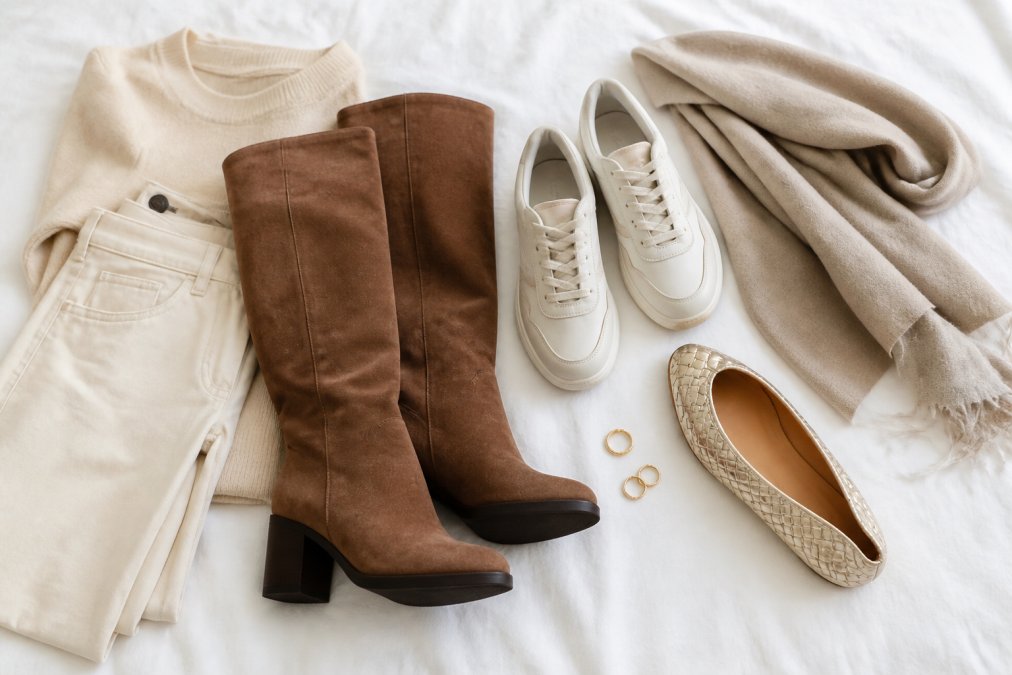
What's actually worth buying:
- Steve Madden Dantelle Tall Boots ($155.99), brown suede, tall silhouette, built for crisp-weather wear. The suede is the point; it ages into character rather than cracking like synthetic.
- Steve Madden Aziel Camel Suede ($109.19), low-top lace-up in suede with a 1-inch heel. Comes with colored stripe laces if you want to break up the neutral palette.
- Steve Madden Momentum Gold ($70.19), vegan leather and suede upper, Velcro closure. The most accessible entry point in the lineup.
- Steve Madden Cyntra Woven Champagne ($101.39), a ballet flat that moves from office to weekend without looking like either.
- BudhaGirl All Weather Rings ($37.44, set of three), waterproof, soundless, airport-security friendly. Available in Silver and the new Aura gold shade.
- Bianca Waterproof Crystal Hoop Earring ($123.76), cubic zirconia, tarnish-free, hypoallergenic, with a one-year warranty.
Caring for Luxury Fabrics and Materials So They Last
Care and maintenance is the gap most buying guides ignore, and it's where cost-per-wear math actually gets decided. A $156 suede boot cared for properly lasts four years. Neglected, it lasts one.

Material-specific care:
- Suede: Brush with a soft-bristle brush after each wear. Apply a protective spray before first use and reapply seasonally. Never machine wash.
- Full-grain leather: Wipe with a damp cloth, condition every three to six months. Store away from direct heat, which dries and cracks the finish.
- Woven textiles: Spot clean only. Hand wash in cold water if the label permits, then air dry flat.
- Cubic zirconia jewelry: Wipe with a soft cloth after wear. Waterproof pieces tolerate daily exposure, but remove before swimming in chlorinated pools.
- Waterproof rings: Rinse and dry. The sealed tubing construction tolerates water, but grit trapped in the bead shortens its life.
Store boots with a shoe tree or rolled magazine inside to hold the shaft shape. Store jewelry flat or hanging, never tangled in a drawer.
Resale Value and Style Longevity: What Holds Up Over Time
Resale value is the honest scorecard for affordable luxury. Pieces built on timeless design and premium materials hold a meaningful share of their original price; trend-driven fast fashion resells for almost nothing. But "holds its value" is a claim, not a number, so here is how to actually evaluate it before you buy.
The Three Factors That Drive Resale Performance
- Material durability. Leather and suede outlast synthetic uppers by years, and buyers on the secondary market price that in. A full-grain leather boot with visible patina resells; a peeling synthetic upper does not.
- Design neutrality. Logo-free, understated silhouettes resell faster than anything tied to a specific season. A neutral suede boot from three seasons ago still reads as current; a logo-print sneaker from the same season reads as dated.
- Brand recognition at the accessible tier. Established names carry resale liquidity that unknown labels don't. A recognizable footwear brand moves in days; an unbranded equivalent can sit for months.
How to Estimate Resale Value Before You Buy
You do not need a pricing database to sanity-check a purchase. Run this four-step test:
- Check the secondary market first. Search the exact model on resale platforms before buying new. If the same item is listed used at 50-70% of retail and moving, the brand has resale depth. If there are no listings at all, there is no resale market, which is fine, but plan to keep it forever.
- Weight by category. Footwear and structured outerwear hold value best because fit is less personal and construction is visible. Knitwear and basics hold the least, they wear out and sizing is idiosyncratic.
- Discount for wear. A piece worn 100 times will not resell at the same rate as one worn 10 times. Factor your own usage into the math.
- Subtract the friction. Resale platforms take a seller fee, and shipping eats into the net. A listed price of 40% of retail often nets closer to 30% after fees and shipping.
The Contrarian Case, and Why the Math Still Wins
Critics argue "affordable luxury" is a marketing construct designed to sell status without the price barrier. There is something to it, the label is applied loosely, and not every brand wearing it deserves the term.
But the resale data complicates the cynicism. Even a modest recovery rate changes the total cost of ownership. If a $156 suede boot resells for $60 after four years, your effective cost was $96 across those years, roughly $24 per year, or about $0.60 per wear at 40 wears annually. The fast-fashion boot at $40, worn 15 times and then discarded, cost $2.67 per wear with zero recovery. The premium piece wins on both cost and longevity.
The sustainable angle follows from the same math. Buying one piece you keep for four years is a smaller footprint than buying eight you replace annually, and the resale market is what makes that longevity financially rational rather than purely aspirational.
Frequently Asked Questions
What is the best affordable luxury brand?
There is no single best brand because affordable luxury covers footwear, jewelry, skincare, and home goods. The strongest options share three traits: premium materials, timeless design, and a price point that stays accessible. The affordable luxury fashion market is projected to reach USD 200.11 billion in 2026, growing at a 7.36% CAGR, which means more brands are entering this space every year. Focus on pieces you will wear or use daily, and check material composition before brand name.
How can I identify high-quality products without designer price tags?
Check three things: material composition, construction details, and care requirements. Genuine leather uppers, suede, and natural fibers like cotton or wool signal quality. Look for hand-finished details, secure stitching, and hardware that feels solid. A waterproof, tarnish-free crystal hoop earring at $123.76 with a one-year warranty tells you more about quality than a logo does. Read the product description for specifics on lining, sole, and closure type.
Is 'quiet luxury' the same as affordable luxury?
They overlap but are not identical. Quiet luxury describes a design approach: logo-free, neutral color palettes, and understated elegance. Affordable luxury describes a price tier: premium quality at accessible prices. A quiet luxury piece can be expensive, and an affordable luxury piece can carry visible branding. The sweet spot is affordable luxury brands that also follow quiet luxury design principles, offering timeless essentials without overt logos at a price point that supports building a full wardrobe.
Where can I find curated lifestyle products that offer luxury value?
Curated online marketplaces for lifestyle goods let you shop across categories like skincare, footwear, jewelry, and home decor in one place. Look for marketplaces that carry a focused selection rather than endless listings, because curation signals quality control. Check whether the marketplace provides detailed product descriptions, material specs, and sizing guidance. A marketplace that stocks waterproof jewelry, genuine leather footwear, and specialized skincare in one store saves time and makes it easier to build a cohesive collection.


